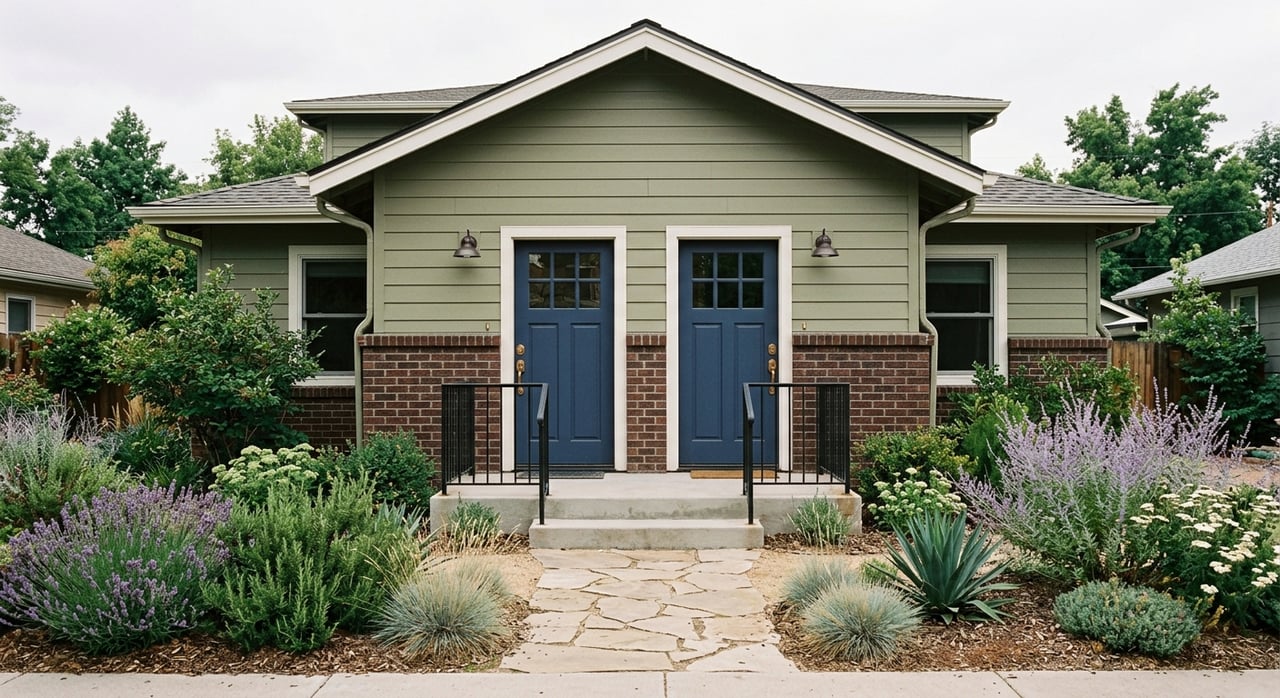
Looking for an investment property in Boulder County without Boulder-level pricing? Longmont deserves a close look. If you want a duplex, small multifamily property, or a house-hack setup with room to improve rents over time, this market offers real opportunity, but not much margin for guesswork. The good news is that with the right strategy, you can narrow your search and focus on the pockets, property types, and upgrades that matter most. Let’s dive in.
Why Longmont stands out
Longmont sits in a useful middle ground for buyers who want Boulder County access with a lower entry point. In March 2026, Longmont’s median sale price was $575,000, while Boulder was around $947,000, according to Redfin’s market data. That pricing gap helps explain why many buyers look to Longmont when Boulder feels out of reach.
At the same time, Longmont is not an oversupplied market. The city’s 2024 population estimate put Longmont at 102,866 residents, and city planning materials note that growth is shaped by a defined planning area and surrounding open space, which limits expansion. Even with slower growth, the city still expects about 24,000 additional residents by 2035 and continues to prioritize infill, redevelopment, and expanded housing options, according to the Longmont Growth Framework.
For you as an investor or owner-occupant, that combination matters. A supply-constrained market with continued population growth can support steady demand, especially for housing types that are harder to find.
Why duplex inventory is limited
If your goal is a duplex or small multifamily property, you are shopping in a relatively narrow slice of Longmont’s housing stock. The city’s 2023 Housing Needs Assessment found that in 2021, 63% of housing units were single-family detached, while only 6% were duplexes, triplexes, or fourplexes.
That small share helps explain why good opportunities can feel scattered. It also supports the idea that missing-middle housing types, like duplexes and smaller attached options, remain important in Longmont’s broader housing mix. In practical terms, you should expect fewer choices, stronger competition for well-located properties, and a need to move decisively when the right asset appears.
Where to search first
Focus on central and west Longmont
If you are trying to find duplexes, small multifamily buildings, or value-add properties, older central and west Longmont are smart places to start. The city’s Housing Needs Assessment shows the highest concentration of vacant rentals in central Longmont west of Main Street, while vacant for-sale units are concentrated in the west area of the city east of Ken Pratt Boulevard.
That does not mean the city is formally recommending those areas for investment. It does mean the vacancy patterns point you toward parts of Longmont where older housing stock and turnover may create more opportunity.
Watch 80501 closely
Among Longmont ZIP codes, 80501 stands out as the most accessible place to look for small multifamily opportunities. Redfin data cited in the research shows a median sale price of about $489,500 in 80501, compared with about $680,500 in 80503. That lower price point can make 80501 especially attractive if you want flexibility for updates, lease repositioning, or an owner-occupied strategy.
Recent examples in 80501 include duplex and small multifamily listings or sales such as 2024 Lincoln Street, 1232 Emery Street, 1530 Atwood Street, 1434 12th Avenue, and the legal triplex at 1300-1304 Holly Avenue. These examples show the kind of scattered inventory that tends to surface in Longmont: not abundant, but often worthwhile when the numbers and condition line up.
Keep selected 80503 pockets on your list
While 80503 generally trends higher on price, it should not be ignored. The research includes 24 Cedar Court in 80503, listed at $425,000 with rents of $1,495 and $1,395, which shows that opportunities can still emerge outside the lower-price ZIP code.
The key is not assuming every opportunity will sit in one area. In Longmont, duplex hunting often works best when you cast a focused but flexible net.
What duplex pricing looks like
Recent Longmont examples suggest that older, house-hack-friendly duplexes often trade from the mid-$400,000s to mid-$500,000s, while stronger-income or larger assets push into the $600,000s. The research points to examples such as 24 Cedar Court at $425,000, 2024 Lincoln Street at $445,000, 1232 Emery Street at $499,000, and 1530 Atwood Street at $525,000.
On the upper end, 1434 12th Avenue and 1300-1304 Holly Avenue were both at $650,000, and a fourplex at 1343 South Coffman Street sold for $725,000. That range gives you a practical framework for underwriting. If you are targeting a duplex with upside, you may still find options below the citywide median, but premium income and better unit mix can move prices up quickly.
What rents may support
Recent asking rents on duplex units suggest that many standard 2-bedroom layouts fall in a band of roughly $1,395 to $1,600 per side. Higher-income units can reach around $2,000 to $2,150, based on the examples in the research.
That aligns reasonably well with Longmont’s broader rent picture. Zillow’s April 2026 data put Longmont’s average rent at $1,951, with $1,772 for 2-bedroom units and $2,600 for 3-bedroom units, as cited in the Housing Needs Assessment.
A useful rule of thumb from the recent listings is that many duplexes may produce about $2,800 to $3,050 in gross monthly rent before garage income or other ancillary revenue. That is an inference from individual properties, not a citywide average, but it offers a realistic starting point when you begin comparing opportunities.
What creates value in Longmont duplexes
In this market, value-add does not always mean a major gut renovation. Often, the best improvements are practical upgrades that support rent growth, reduce deferred maintenance, or make the property easier to operate.
Recent listings highlight several recurring themes:
- Roof replacement
- New water heaters and furnaces
- Interior paint and flooring
- Kitchen updates
- Egress or bedroom-count improvements
- Separate utility metering
- Off-street parking
- Garage income potential
- Repositioning a vacant or month-to-month unit
For example, 24 Cedar Court advertised a new roof, new water heaters, interior remodel work, and individually metered utilities. 1530 Atwood Street showed the appeal of an all-brick duplex with month-to-month leases and visible interior upside.
If you are comparing two similar properties, details like separate utilities, parking, lease flexibility, and garage monetization can materially affect long-term performance.
ADU potential and house-hack options
For owner-occupants, Longmont’s ADU rules are especially relevant. According to the city’s ADU Guide, ADUs are allowed in R-RU, R-SF, R-MN, R-MF, MU-D, and N-AG zones, and they may be internal, attached, or detached.
That opens the door to several house-hack paths, depending on the property. A single-family home with the right layout may support a basement conversion, attached ADU, or garage conversion. A duplex buyer who plans to live in one unit may also want to understand whether the site and zoning create future flexibility.
There are some important limits. The same guide says ADUs cannot be sold separately from the main dwelling and generally cannot be rented for fewer than 30 days. It also states that ADU applicants must show Longmont residency, which makes this tool most relevant if you plan to live in the city.
From a budgeting standpoint, the city says ADU fees typically range from $5,000 to $10,000, and ADUs are generally 65% less expensive to build than a new single-family home. That does not make every project easy, but it does suggest why lower-cost expansion strategies are worth evaluating when a property has the right bones.
Why zoning still matters
Longmont’s policy direction is gradually broadening housing choice, and that matters for long-term investors. City development documents from March 2026 describe 1313 Spruce in the Bohn Farm neighborhood as an R-MN project with 61 units made up of townhomes and duplexes. Another active log entry references an existing duplex on Denver Avenue being split into two parcels.
That makes R-MN one of the more relevant zoning categories to watch if you want duplex or townhome-style opportunities. It does not guarantee inventory, but it gives you a clearer lens for where future product may emerge.
The broader pipeline also supports the case for continued housing development. The Housing Needs Assessment says 1,735 units were under construction, with 7% of those as duplexes or triplexes, while another 1,551 units were approved or under review, and 71% of that pipeline was multifamily. For you, that signals a market that is still trying to add supply, even if the rollout remains incremental.
A smart way to evaluate opportunities
When inventory is limited, the best deals often are not the ones that look perfect on day one. They are the ones where you can clearly identify upside and confirm that the location, zoning, condition, and rent potential all work together.
As you evaluate a Longmont duplex or small multifamily property, focus on these questions:
- Is the asking price supported by recent local comparables?
- Are current rents at market, below market, or partially vacant?
- Does the property have deferred maintenance that will affect cash flow?
- Are utilities separated or easy to separate?
- Is there parking, garage income, or other ancillary revenue?
- Does zoning support an ADU or other future flexibility?
- Are lease terms creating an opportunity to reposition units?
This is where local guidance can save you time and help you avoid expensive assumptions. In a market like Longmont, strong returns often come from careful property selection and a realistic improvement plan, not from chasing volume.
The Longmont opportunity in one sentence
Longmont is not a market with endless duplex inventory. It is a market where the right duplexes, triplexes, ADU-capable homes, and small value-add properties appear selectively, often in older central and west Longmont, and reward buyers who understand pricing, rents, zoning, and renovation potential.
If you want help sorting through duplex opportunities in Longmont or comparing value-add options across Boulder County, Kristin Kalush can help you build a data-driven strategy with local insight and a practical eye for upside.
FAQs
What makes Longmont attractive for duplex investing?
- Longmont offers a lower median sale price than Boulder, steady housing demand, limited small multifamily supply, and a city planning direction that supports infill and expanded housing options.
Where should you look for duplexes in Longmont?
- A strong first search area is older central and west Longmont, especially 80501, with selected opportunities also appearing in 80503 and in areas tied to R-MN development activity.
What do Longmont duplexes typically cost?
- Recent examples in the research show many duplexes trading from the mid-$400,000s to the mid-$500,000s, while larger or stronger-income assets can reach the $600,000s and above.
What rents can a Longmont duplex produce?
- Many recent duplex examples suggest rents of roughly $1,395 to $1,600 per side for standard units, with stronger units reaching about $2,000 to $2,150.
Can you add an ADU to a Longmont investment property?
- In some cases, yes, but it depends on zoning and occupancy requirements. Longmont allows ADUs in several zoning districts, and the city’s ADU guide is the key place to confirm what is allowed for a specific property.
What upgrades add value to Longmont duplex properties?
- Common value drivers include roofs, furnaces, water heaters, interior finishes, kitchen updates, separate utility metering, parking improvements, garage income, and the ability to reposition leases.