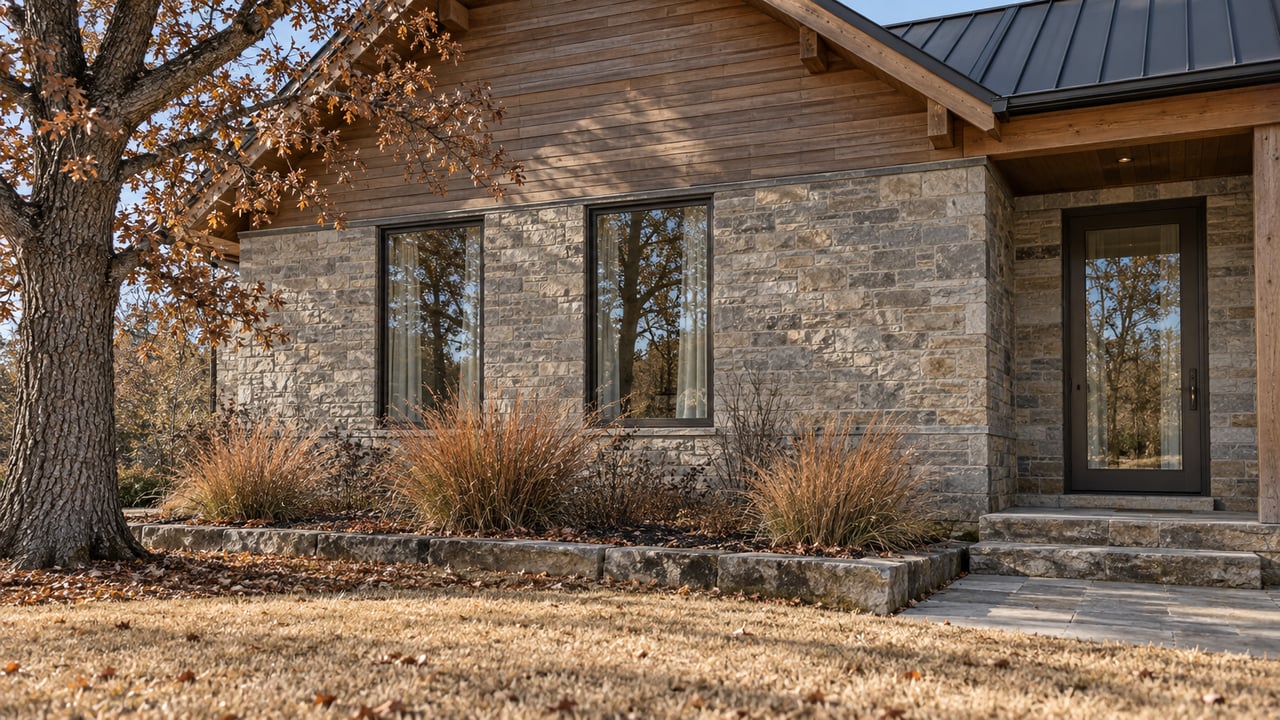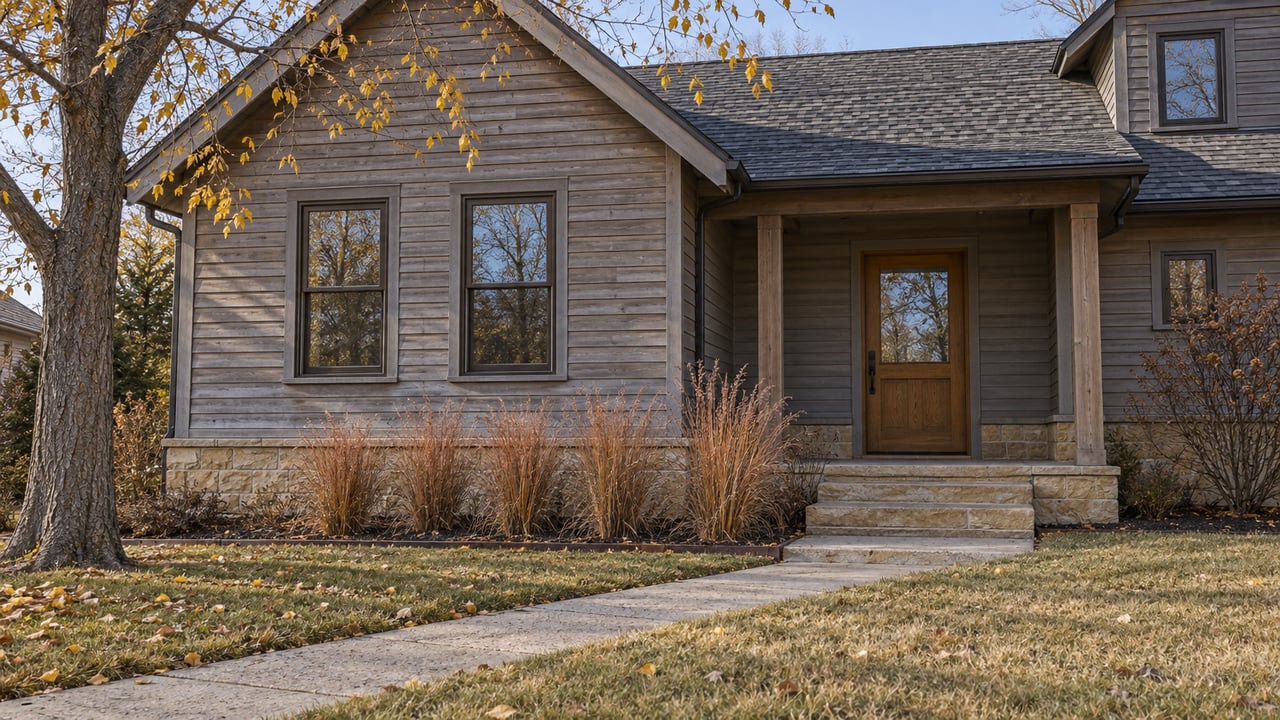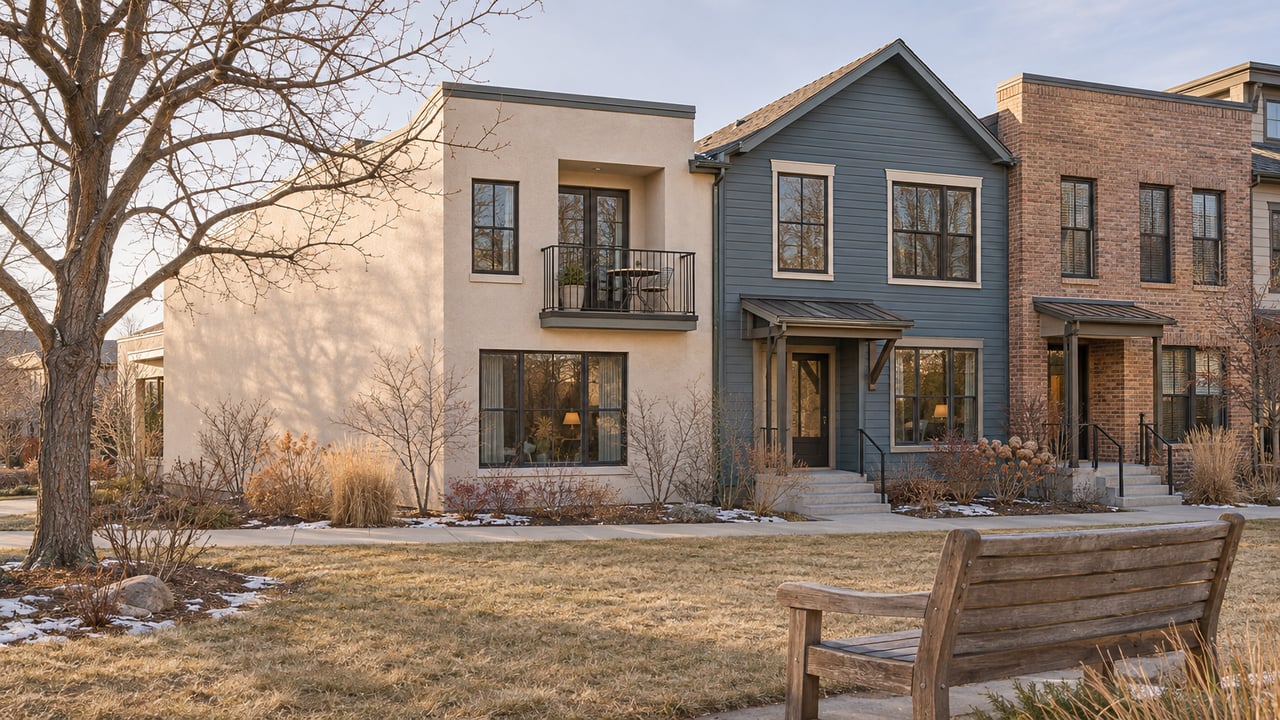
The street names in Prospect New Town include Ionosphere Street, Tenacity Drive and 100 Year Party Court. In a 2024 Boulder Weekly feature, the houses along them change design "from house to house and block to block," and they have porches facing the street where most suburbs put garage doors. The neighborhood mixes detached houses, townhouses, courtyard houses, apartments and live/work lofts, and it was planned that way three decades ago.
That mix matters more this winter than it has in years. Longmont's detached homes and its townhomes and condos are moving at different speeds right now. In Prospect, both kinds of home share the same parks and the same short walk to the town center. A buyer there can get the same neighborhood through either market, and the two markets do not give buyers the same amount of room to negotiate.
Every kind of house in one neighborhood, by design
The idea came from developer John "Kiki" Wallace, who wanted to find a new use for his family's tree farm just south of Longmont. In January 1994 he invited town planner Andres Duany to run three days of public workshops at the Longmont Opera House. In those sessions, residents laid out the streets and parks and drafted the design codes meant to hold the place together. Duany's firm, Duany Plater-Zyberk, also planned Seaside in Florida and Kentlands in Maryland.
The DPZ project record lists a 77-acre site and a 1993 design date. The program called for rowhouses, live/work units, detached single-family houses and apartments above garage outbuildings, with architectural details inspired by the region's mining towns. Landscape rules required native plants that need little water, and the streets were laid out to keep views of the peaks to the west. Boulder Weekly dates Prospect's opening to the mid-1990s.
The neighborhood's own history page says that at full build-out it will have 585-plus units on 340 lots. A town center with a large park, shops, a swimming pool and restaurants sits within a five-minute walk of the homes.
What the town center has become
That five-minute walk now ends somewhere with real character. Johnson's Station began as a roadside gas station and became a familiar Northern Colorado landmark. It was later moved to Prospect and converted for new uses. According to BizWest, the Longmont firm F9 Productions restored the neon sign, turned the vintage gas pumps into electric vehicle chargers and made the site of a former swimming pool into a public plaza and outdoor dining area. In September 2026 the project received an AIA Colorado Design Award honorable mention for historic preservation and restoration, its third major design honor.
A bookstore arrived a year earlier. The Times-Call reported that The Quill & Candle Bookshop held its grand opening in September 2025 at 2007 100 Year Party Court, in a space that had been a clothing boutique. Married co-owners Aubri and James Cook stock romance, science fiction and fantasy, and the shop has a separate room for children and teens.
Prospect's coffee shop is older than either of them. When Boulder Weekly visited in 2024, Cavegirl Coffeehouse manager Jacob Erdman told the paper, "You can live here and not drive. A lot of people stop in with bikes, strollers or with their dogs." The same feature described rooftop and street-level patios at the neighborhood's eateries, along with Urban Thai and Carciofi Pasta & Lounge.
For a buyer, this list matters because the town center is part of what you get with any Prospect address. Johnson's Station and the bookshop are part of the package for a Prospect townhouse and a Prospect detached house alike. The market prices those two homes very differently right now.
Two Longmont markets, one neighborhood
The most recent city-level report from the Longmont and Boulder Area REALTOR association covers September 2026. It shows two different markets.
In September 2026, Longmont's single-family homes had 2.9 months of supply, down from 3.3 in September 2025. Active inventory fell from 310 homes to 273 over the same year. The September median sales price was $600,000, up 1.7% from a year earlier, and sellers received 98.2% of list price. Days on market rose from 49 to 69 that month. For January through September, though, detached homes averaged 58 days on market, the same as in 2025, and closed sales were up 3.6%. Supply is shrinking and sales are holding, so this side of the market is still tight.
Townhomes and condos tell a different story. Longmont's attached homes had 5.1 months of supply in September 2026, up from 4.9 a year earlier. The September median fell 8.2%, from $460,000 to $422,495. Only 18 attached homes closed that month, and the report warns that a single month can look extreme with a small sample. The January-through-September numbers are steadier and point the same way. The year-to-date median for attached homes was $441,350, down 1.9%, and the average time to sell rose from 73 days to 89.
These figures cover the whole city, not Prospect alone. Still, a Prospect rowhouse competes for buyers in Longmont's attached market, and a detached Prospect house competes in the detached market. In September 2026 the attached side had nearly twice the months of supply.
Why the attached side is slower, and what the list-price numbers hide
The Colorado Association of REALTORS' October 2026 market release gave a reason for the gap across Boulder and Broomfield counties. It said condos and townhomes were taking nearly twice as long to sell as single-family homes. The release linked that to first-time buyers, a large share of the attached market, who it said remain especially sensitive to monthly payments.
The same release made a second point that explains the 99.1% of list price Longmont's attached sellers received in September. About 52% of transactions in Boulder and Broomfield counties involved seller concessions averaging 5% of the purchase price, often used to buy down the buyer's mortgage rate. Days on market are also counted from the most recent list price, so weeks spent on the market before earlier price cuts don't show up. The Longmont report adds that its prices do not account for seller concessions.
Put those together and a sale at nearly full asking price may include a reduced list price and a concession at closing. The release's summary for the two counties was that buyers have leverage and that the asking price is "only part of the story."
What that means on a Prospect street
Prospect's design is what makes the split usable. Its townhouses, courtyard houses and live/work lofts were planned into the same neighborhood as its detached houses, with the same parks and the same walk to Johnson's Station and the bookshop. A buyer who mainly wants the neighborhood can reach it through Longmont's slower attached market, where the citywide numbers show more supply and longer selling times.
A buyer set on a detached Prospect house is in the tighter market, where Longmont inventory was shrinking through September 2026. In that market the useful details are a specific house's history, how long it has been listed and any price changes, more than the citywide trend. A seller is in the mirror image. A detached Prospect listing comes to market with less competition than it would have had a year ago. An attached listing comes to market where pricing, presentation and a concession plan matter more.
Comparing a Prospect rowhouse with a detached house nearby means comparing the full monthly cost of each, not just the purchase price.
The parcel at Pike and Main
Prospect's most recent approved plan covers land near Pike Road and Main Street. The Longmont Leader reported in February 2023 that the Planning and Zoning Commission approved a fourth filing on the remaining 4.8 acres west of Main Street and south of Pike Road. The plan includes three four-story apartment buildings with 168 one- and two-bedroom units, plus 12 duplexes, parking garages and 16,288 square feet of commercial space. It replaced a 2003 approval for 74 homes and 80,000 square feet of commercial space. BizWest's 2025 Breaking Ground listings named Shaheen Development as the company behind the 180 homes and the commercial space.
That plan puts more homes and less commercial space at Prospect's edge than the original approval did. A buyer weighing a home near Pike Road and Main Street should count it as part of the block's future.
A few questions buyers ask about Prospect
Who planned Prospect New Town? Duany Plater-Zyberk designed it in 1993 for developer Kiki Wallace. The plan grew out of public workshops held at the Longmont Opera House in January 1994.
What kinds of homes are in Prospect? Detached houses, townhouses, courtyard houses, apartments and live/work lofts, according to the neighborhood's own history page.
Are Prospect's townhomes in a different market than its houses? They compete in Longmont's attached market. In September 2026 that market had 5.1 months of supply, compared with 2.9 months for single-family homes.
You can find more on the city's housing in our Longmont neighborhood guide, and on downtown's recent changes in our look at the Coffman Street restaurant corridor.
If you're weighing a Prospect rowhouse against a detached house a few doors down, or deciding when to list a home in Prospect, Valta & Co. can go through the recent Longmont sales for that type of home with you, including concessions and price changes, before you set a number. Start with a Free Market Consultation.